At first glance, these statements seem small and insignificant. But every one of them changed my life in ways I could never have imagined.
Life has a way of turning the tiniest moments into the most consequential outcomes. I was reminded of this over the weekend while skiing on the hill. I watched my fellow ski patrollers respond to a code on the side of the mountain, helping someone who had made just one wrong turn. A single degree off course was all it took to change their day—or even their life—forever.
The same holds true in our everyday interactions. The impact of those small moments may not reveal itself immediately—it could take days, weeks, or even years—but they carry the potential to alter the trajectory of our lives in profound ways.
One degree.
A friend of mine, Wiley, reminded me of this recently. It only takes one degree—a single small decision, action, or moment—to change someone’s life or even your own.
Think about the ripple effect of a simple “hello” to a stranger who may have lost hope.
Or the unexpected phone call to a friend you haven’t spoken to in years.
Or the question someone poses to you—or you pose to yourself—that unlocks a new path forward.
As we step into the new year, many of us will make resolutions and promises to ourselves and others. If you’re one of those people, remember this:
It doesn’t take a monumental shift to make a difference. Sometimes, the smallest adjustments can have the biggest impact.
You might not see the effects right away, but believe me, one degree can set you on a course toward a future you never dreamed possible.
Last year, I had the opportunity to travel to Israel with a group to help rebuild one of the kibbutzim that had been destroyed during the horrific attacks of October 7th. It was a powerful and heavy experience.
During our stay, we spent some time in Tel Aviv for meetings, and it was in one of these meetings that took me by surprise…
As we stepped off the elevator at one of Israel’s largest banks, I saw a striking piece of art hanging on the wall. It was a photograph of the kibbutz we had been helping to rebuild. But this wasn’t just any photograph—it was layered with an iron sculpture, representing the family that had been tragically murdered in the attack.
It stuck with me…
Fast forward…
I found myself at the United Nations in New York, attending an exhibition hosted by Orna, the Israeli artist whose work I had seen before. Orna’s exhibition was dedicated to commemorating the events and the lives lost on that fateful day of October 7th. My friend Pete and I were invited to attend, and so off we went.
Standing there at the UN, I was once again struck by the emotional depth of Orna’s pieces. Each work of art seemed to echo the anguish, resilience, and collective memory of the people who had suffered, and yet, each piece was also a testament to their enduring spirit.
Here is some of her work from that exhibition..
It was at that moment that Orna and I began to talk. As we were chatting, I discovered something deeply personal: like me, her family had roots in Poland and had survived the Holocaust. We had a shared history that spanned generations and continents. The conversation shifted to her family’s story, and she began to show me more of her work—a collection of pieces that she had created to honor their memory.
And then, I saw it. A photograph in her book of men wearing hats…
Hats that reminded me of my grandfather.
The kind of hats he used to wear.
For all I knew, one of those men could have been a relative of mine.
Rewind….
My family and I established The Reich Family Holocaust Education Program at the University of Wisconsin’s Hillel. Our goal was simple: to ensure that future generations understand their past in order to build a better future. As we discussed the endowment, the idea emerged to include a piece of thought-provoking art in the building—something that would inspire students to reflect on their own heritage, their own stories, and the stories of those who came before them.
And here I was, standing at the United Nations, looking at Orna’s powerful work, thinking about that idea. I turned to her and asked..
“Orna, what do you think about hanging one of your pieces at the University of Wisconsin?”
Last week…
We hung one of Orna’s pieces—a striking sculpture of iron hats—in the main lobby of the UW-Hillel building. The hats are a symbol, not just of the past, but of resilience, memory, and the future. They are a reminder that, even in the face of destruction, we build. We teach. We carry the light forward and ensure our resolve is as strong as iron.
Last week marked a significant milestone with the announcement of our new company, Personal Day.
Having had the privilege of working on successful brands like TULA and Dibs Beauty, I’ve learned important lessons about what truly makes a health and beauty brand resonate. One key takeaway? Authenticity matters. In an industry flooded with celebrity names stamped on generic products, real success comes from a brand with a genuine story, purpose, and mission.
When I first met Lili Reinhart, I had no idea who she was (no offense, Lili!)—nor was I familiar with her role in Riverdale. But as I got to know her, something clicked. It became clear that Lili wasn’t just another face. She embodied what most great entrepreneurs do: a deep understanding of the problem at hand, with a desire to roll up their sleeves and do the work.
Lili’s personal battle with acne and mental health isn’t just a backstory; it’s her driving force. She brings real passion and lived experience to the table—qualities that are essential for building a meaningful brand. Her entrepreneurial spirit shines through in every conversation. Of course, she’s also an incredible actress with a dedicated community, but it’s her authenticity and dedication to this mission that truly set her apart and is part of the reason we got excited to build this brand.
So, that’s the scoop on Personal Day—and a bit of love for Lili and fun to revisit the health and beauty category, in a similar, but different way to what we did at TULA. We’re excited about the journey ahead and invite you to follow along.
I had a chance to join Jason Kirby on his Podcast to talk all things startups, fundraising, M&A, and bouncy balls. Jason also started and sold a few companies and is now running a company called Thunder VC where he’s helping founders navigate the wild world of fundraising and M&A.
His show notes and full video are below. It’s a good one.
→ Don’t Be Afraid to Pivot “Why My Mom Became My First Customer Service Rep” → Choose Partners Wisely “The Day I Realized My Business Partner Was on the FBI’s Radar” → Embrace the Unexpected “How Throwing College Parties Led to a Marketing Company” → Turn No’s into Yes’s “The VCs Said No. So We Did Everything They Said We Couldn’t.” → Follow the Wave “When Facebook Was Rising, We Rode the Social Media Wave” → Stay True to Your Vision “Why I Left a Cushy Corporate Job to Build My Dream… Again” → Build Relationships, Not Just Companies “How Saying No to an Investor Led to Multiple Deals Down the Road” → Think Beyond the Fundraise “The Goal Isn’t Raising Money. It’s Building a Profitable Company.” → Give Back “Why I Angel Invest: It’s Not About the Money”
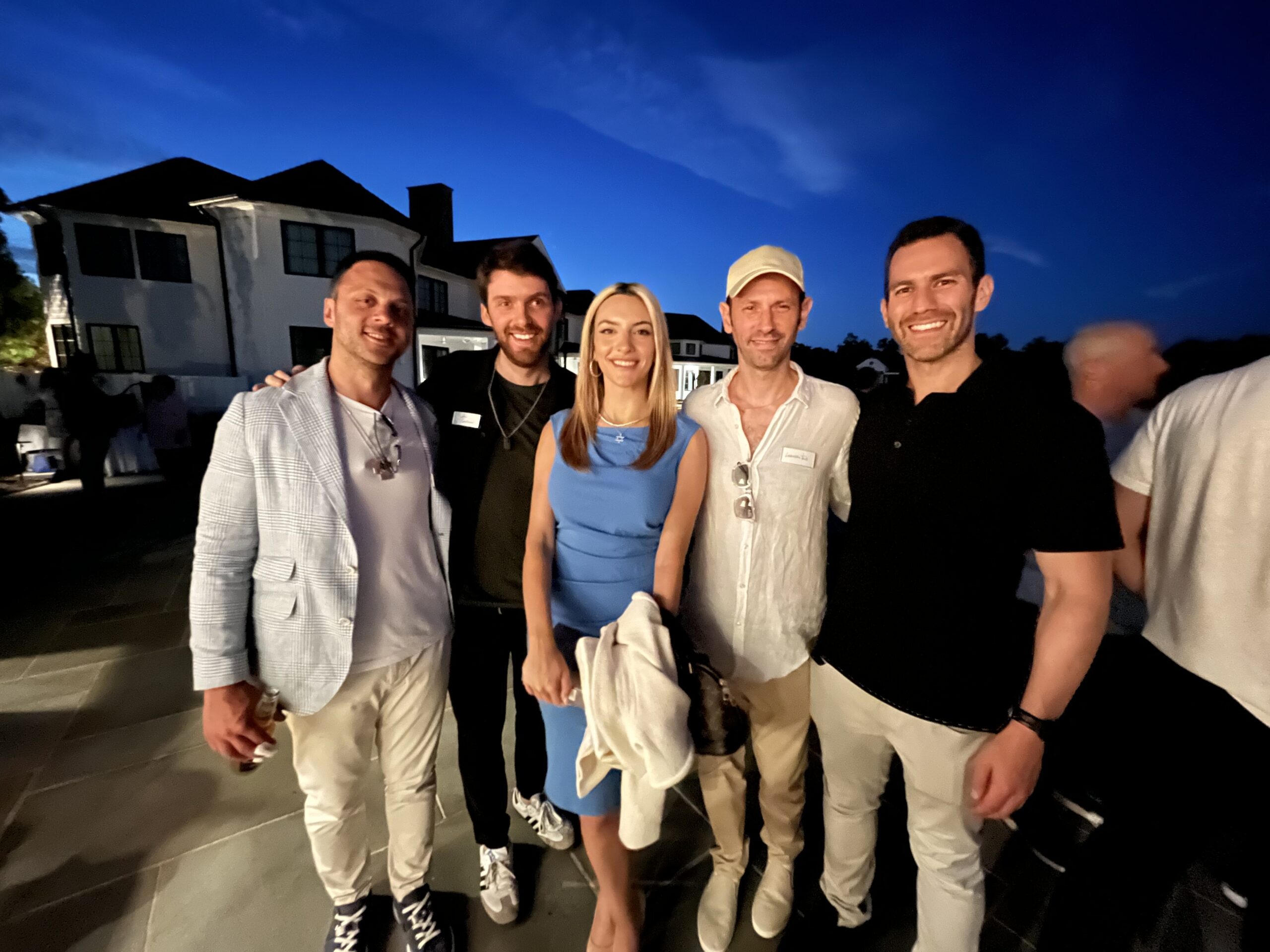
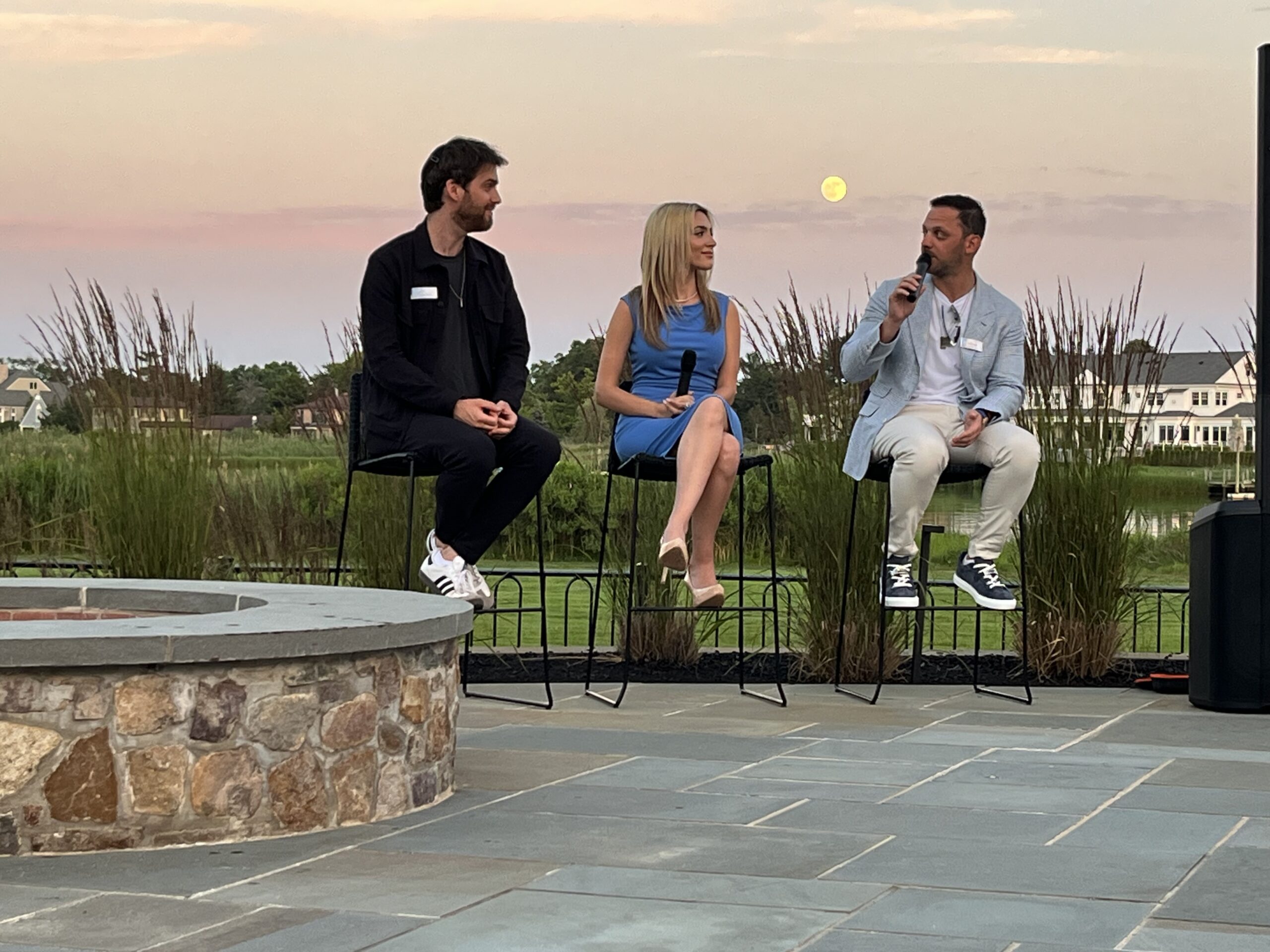
Last night, we hosted an event at my house to share what we have learned on our recent trip to Israel and the plight of the Jewish people, what we are doing to combat antisemitism, and kick off “The Path to the Future” fundraising for The Reich Hebrew Academy.
We were joined by good friends including Emily Austin and Joe Teplow who shared their experiences over the past few months.
The full speech I gave is below.
If you’d like to help make this a reality, please donate here.
**** The speech ****
I’ve spent most of the months since October 7th, learning, engaging, and assessing for my own eyes, what’s really going on and where we go from here.
I helped organize one of the first screenings of the October 7th footage in New York City outside of the UN. We got permission to do this from the Israeli government because they believed, as we did, that if we positioned a video of massacres against “humans” instead of Jews, it wouldn’t be so political and would get more viewership. Leandro is here with us. He helped coordinate that viewing.
I went to Israel to bear witness, see the site of the massacres, meet with family members of the deceased and hostages, and help rebuild Kibbutz Reim, which is where the Nova festival was. With IDF artillery firing off every fifteen minutes or so, and only a few kilometers from the Gaza border, we met up with 4 childhood friends from the Kibbutz to take on a rebuilding effort. The goal was to build a communal wine center to catalyze community and get people back south. It was actually the first time since 10/7 that people moved back home. I remember a young mother pushing her stroller with her baby in it, with either side of the street made up of burnt, bullet-ridden, homes. Some of which were used by Hamas to rape some of the women from Nova, right before Hamas killed them. That was probably the first stroller at the kibbutz since October 7th. One of the friends they were doing this for, the rebuilding effort, was the 5th friend of the group. They thought he was being held hostage the whole time and believed like many of us, with enough pressure and advocacy, we could get him and other hostages home. Well, just two weeks ago we learned that he wasn’t held hostage but was murdered on the seventh. It’s just taken months to identify him. Can you imagine what must be done to a person so that it becomes impossible to identify them for months? Dolev leaves behind his wife Segal and four children. My friend Josh, who is with us today, is going back to Dolev’s Kibbutz in a few weeks to continue the revitalization efforts with Dolev’s friends and family.
I’ve met with leaders here in the US, like the CEO of the ADL, Hillel International, my fellow board members at UW-Hillel Wisconsin, and the new incoming CEO of AIPAC to understand in greater detail some of the domestic issues we are having. None of this will surprise you. Hate crimes have increased by over 500% since October 7th. If you’ve paid any attention to social media or the congressional hearings at all you’ll see with your own eyes the assault Jewish college kids are under, especially at Ivy League compasses when “context” is required to figure out if genocide against Jews is acceptable or not. Could you imagine being in school as one of these students right now? If I told you “the era of extreme Jewish intellectualism is now at an end” you wouldn’t be able to tell me if that was a history teacher at Harvard or Colombia or Joseph Goebbels in 1933 in Berlin’s Opera Square. Hint, it was not the teachers.
And in two days, I’ll be heading back to Israel on a delegation to meet with President Herzog and members of Knesset in Jerusalem. On my way there, I’ll be checking a bag on the plane with 4 drones and giving them to an IDF soldier upon arrival so they can increase their eyes and ears in the north in preparation for what will likely be another front against Hezbollah. And by the way, two days ago operational plans for an offensive in Lebanon were approved and validated by the IDF generals.
These are just a few things I’ve been a part of but I just share this to give you a sense of the recent perspective I have.
Of everything though, there was one moment that still reverberates loudest in my mind. It’s part of the reason you are all here today.
On our trip to Israel, we met with Ari Shavit at a VC’s office in Tel Aviv. Ari is an Israeli reporter and writer. He was a senior correspondent at the left-of-center Israeli newspaper Haaretz is the author of the 2013 New York Times Best Seller My Promised Land: The Triumph and Tragedy of Israel. He was describing his view on the war and the four parts or phases going on now.
In the first phase, which the entire world is fixated on, we see the war between Israel vs. Hamas. This is the loudest flashpoint and the one that most easily personifies the David vs Goliath where the almighty Israel, far outpowers the tiny and incapable Palestinian people.
In the second phase, one that gets much less attention is the broader conflict. It’s not just Israel vs Hamas, but Israel and the West vs Iran, Hamas, Hezbollah, Syria and Yemen, with all of them firing rockets into Israel. And if there was ever any doubt of Iran’s involvement, we all saw it with our own eyes on the evening of April 13th when Iran launched a drone and missile attack on Israel consisting of over 200 rockets and drones.
Even now, there are over 100,000 people from northern Israel who are displaced from their homes due to the ongoing assault by Hezbollah in the north.
And even worse, in the third phase, we see that we are in a new Cold War between Israel, US, Ukraine, Taiwan on one side and Russia, Iran, and China on the other side. And if you’re not sure these things are connected just think, Iran has been providing drones to Russia while the US is providing drones to Ukraine. And just two weeks ago China launched military drills around Taiwan. Taiwan, the place responsible for the majority of the world’s precision chips used for precision weapons, at a time when the world’s greatest superpowers are quickly depleting their stockpiles in Ukraine and the Middle East. These things are all connected and the hot wars are indeed getting hotter.
And then there is the fourth phase. The most important phase. The ideological information war and its most important target: America.
Sinwars aim is to make Israel another South Vietnam. For anyone who remembers that time, you may recall that the way the guerrilla warriors won the Vietnam War was not through rice fields but through the American public. It was the visual carnage that swayed political decisions much like how we see dead babies and demolished buildings in Gaza all over media. I get it. It’s painful to look at. Even for me, a Jewish, first responder, who knows exactly what’s happening, it’s still horrible to look at.
But the thing that left me the greatest impression is this..
Ari said,..
“I’m not afraid of losing the war in Gaza. But I am afraid of losing the war in Boston.”
And I thought, and knew, but didn’t say..
We are losing…
In Boston, in California, in New York, in London..in New Jersey.
If you spend any time on social media or on media in general, it’s easy to feel this way.
The protests, the hate crimes, the congressional hearings.
Two weeks ago right here in New Brunswick, a Jewish group of students were omitted from a NJ school yearbook photo, replaced with Muslim students. Could you imagine the outrage if that happened to black kids? Asian kids? Gay kids?
And sticking with New Jersey for another moment..
In April, Students at Rutgers voted overwhelmingly to call on the administration to divest from companies and organizations that do business in Israel and to end a partnership with Tel Aviv University. With 8,000 students out of the 44,000 enrolled at Rutgers’ New Brunswick campus voting, 80% of participating students said the university should “divest its endowment fund from companies and organizations that profit from, engage in, or contribute to the government of Israel’s human rights violations.”
I could go on, but these are just two of many examples of the assault on our schools.
You’ve all seen instances like this and more.
Today. In the United States of America. In 2024.
And this was not by accident.
This hot war in the Middle East has been in the works for years, with an information war taking place right beneath our feet, hiding in plain sight and is the set up for what we are seeing now. It’s been taking place for decades and is still happening now.
Did you know for over a decade, American universities have been the recipients of financial gifts from special interest groups? Here are just a few of my favorites:
Since 2012:
The Palestinian Authority has given over $1 million to American Universities
Syria: $1.3mm
Pakistan: $6.4mm
Lebanon: $21mm
Iraq: $45mm
Russia: $141mm
Saudi Arabia: $1.5 billion
China: $1.7 billion
And my favorite, Qatar, the place that Hamas leadership calls home and lives comfortably while dictating orders to Sinwar and Hamas in Gaza, $3.2 billion.
In the last 9 Years, US Universities Accepted Gifts totaling $19 Billion From Authoritarian Countries like these including, of course, Qatar, China, Saudi Arabia.
And when you mix in state-owned and operated technology platforms like TikTok, yes, it is state owned by China and it is being manipulated by China, you have the perfect storm and tailwinds for an all-out information war against our youth and Western society as a whole.
Our adversaries know this.
The battle for hearts and minds is the most important aspect of this war and any war throughout history. It’s why the Nazis had the role of “chief propaganda officer” with Goebbels, and why the term “Pallywood” makes its rounds on social media. Our enemies know that if they can brainwash the youth, in just a few years time, they will be our doctors, or lawyers, our police officers, and our elected officials.
Actually, I was with the new CEO of AIPAC yesterday and he corrected me. He said it’s worse. Not just a few years but things could be much worse as soon as next year given the escalation in political battlegrounds with candidates far worse than Ilan Ohmer or AOC.
And if you don’t believe me, consider that my friend Lenny Wilf just last week told me that his father, a holocaust survivor, would always say..
In 1929, the best place in the world for Jews was Germany.
Or Jonathan Greenblatt, CEO of the ADL told me, his father-in-law lived the greatest, most prosperous life until he had to flee…Iran.
“It could happen here.” That’s the title of Jonathan’s book. And he’s right.
But there is good news.
And there is a path forward..
Information, education, and truth is the best disinfectant against lies and it’s the best way to bring light into the darkness.
We know how to do that. We know how to educate. And we know how to turn education into world-changing moments and milestones.
As of 2023, at least 214 Jews or people with at least one Jewish parent have won the Nobel Prize or the Nobel Memorial Prize in Economic Sciences, representing 22% of all recipients. This is despite Jews making up only 0.2% of the world’s population. In simple terms, the Jewish share of winners is 110 times greater than their proportion of the world’s population.
Or, consider the economic growth that has come out of the tiny jewish State of Israel. Israel ranks #7 in the world for creating the most unicorns or billion-dollar plus companies, has more than 100 companies listed on US exchanges, with a combined market cap of more than $150 billion, and has the fourth most companies listed on the Nasdaq after the United States, Canada, and China. There is a reason Israel is called the Startup Nation.
Or lastly, let us consider one more example in another moment in time. In 1852, New York City, Jews faced discrimination and were often not welcomed at hospitals. Jewish philanthropists got together and founded Mount Sinai, as a safe haven and medical facility for their community. Today, Mount Sinai is one of the leading healthcare institutions in the world, serving all citizens, of all religions, ethnicities and backgrounds. It’s is a shining example of “Tikkun Olam” and a playbook for building institutions that simply make the world a better place while simultaneously taking care of our own.
It’s this ethos that has allowed me to host all of you here, in this wonderful home.
Because being educated, being ethical, being moral, and being good, is how we as Jews have thrived, and more importantly, it is how we’ve survived.
And so I’ll leave you with a quote from Mark Twain, who attempted to figure this out in 1897, well before modern-day Israel existed.
He said..
“If the statistics are right, the Jews constitute but one quarter of one percent of the human race. It suggests a nebulous puff of star dust lost in the blaze of the Milky Way. Properly, the Jew ought hardly to be heard of, but he is heard of, has always been heard of. He is as prominent on the planet as any other people, and his importance is extravagantly out of proportion to the smallness of his bulk.
His contributions to the world’s list of great names in literature, science, art, music, finance, medicine and abstruse learning are also very out of proportion to the weakness of his numbers. He has made a marvelous fight in this world in all ages; and has done it with his hands tied behind him. He could be vain of himself and be excused for it. The Egyptians, the Babylonians and the Persians rose, filled the planet with sound and splendor, then faded to dream-stuff and passed away; the Greeks and Romans followed and made a vast noise, and they were gone; other people have sprung up and held their torch high for a time but it burned out, and they sit in twilight now, and have vanished.
The Jew saw them all, survived them all, and is now what he always was, exhibiting no decadence, no infirmities of age, no weakening of his parts, no slowing of his energies, no dulling of his alert but aggressive mind. All things are mortal but the Jews; all other forces pass, but he remains. What is the secret of his immortality? “
Well, I’ll tell you that secret…
When our enemies teach their kids to praise death, we teach our kids to praise life. And to live good, educated, loving, fulfilling lives. That’s what The Hebrew Academy has done for me, continues to do for others, and hopefully with your help, will continue to do for years to come.
Together, we can and we must continue to invest deeply in the next generation to ensure our collective legacy and story carries on.
Ldor v’dor.
From generation to generation.
That’s the secret.
Thank you
And here is the original announcement of the new school.
If you’d like to help make this a reality, please donate here.
I recently had a chance to catch up with my friend Michael Karnjanaprakorn. We’ve known each other for at least a decade or so now from the early days of the New York Tech ecosystem. This was a fun one.
And, some highlights that Mike pulled out from our conversation.
Dan Reich: “Business is a video game.”
I asked Dan Reich who has sold four companies to Salesforce, Buddy Media, and Procter & Gamble:
“Why are you still building companies instead of retiring and riding off into the sunset?”
He shared a conversation with a fellow serial entrepreneur:
CEO: “Do you still play video games? Dan: “Yeah, I do still play video games.” CEO: “So do I. But this business is a video game, and it’s a game that other people gave me money to play. If I win, not only will I make them money, I’ll make money too. And I love the video game.”
Dan reflects on this analogy:
Dan: “He was right. The journey is the prize. I tell everyone I have a career conversation with: People who optimize for money are not happy, and people who optimize for happiness end up finding money.”
In this episode, Dan dives into:
• His transition from 4x founder to building a venture studio. • His playbook for building companies. • His advice for navigating a post-exit journey.
When Joe Grand finally succeeded in freeing my coins, it was a moment of immense relief and high-fiving. But more importantly, it sparked an idea. We saw an opportunity to assist others who found themselves locked out of their cryptocurrency treasures.
Thus, OffSpec.io was born—a company dedicated to helping people recover passwords, private keys, and other crucial cryptocurrency data from hardware and software wallets. Our mission is to provide a lifeline for those navigating the complex and often unforgiving world of digital assets, ensuring that no one has to endure the anxiety and uncertainty that I experienced.
And just this week, Joe did it again, this time with some help, and a very different problem and approach.
Today is Yom Hashoah, which in English is Holocaust Remembrance Day.
Many stories from the time mirror the ones we witnessed on October 7th.
Like this one…
1939, one fall Sunday morning, Nazis showed up out of nowhere and decided to round up a bunch of Jews. Twelve people were rounded up and were forced to march five miles to their schul (temple), dig a ditch, and then were executed point blank.
Only one of the twelve survived. It was my grandfather.
My grandfather, Samuel Reich. Top, middle, right
Why?
He decided to run out of the death march assembly line and hide for several hours.
2023, another fall morning, Jews were found running once again for their lives, with many being raped, tortured and executed. Arguably worse than what the Nazis did given Hamas’ sheer joy and glee in doing so.
October 7, 2023 – People running away from Hamas terrorists at the Nova festival.
We’ll see Holocaust denial and people trying to relate the holocaust to Gaza, or Israelis to Nazis. Of course, they will. They so desperately wish to be the victim and can’t comprehend how Jews survived the Holocaust and just a few decades later are simultaneously 0.2% of the world’s population yet, overperformers in terms of productivity and contributions to the world. This paradox shortcircuits their brains.
Hate, jealousy, and scapegoating are real and more alive than ever before.
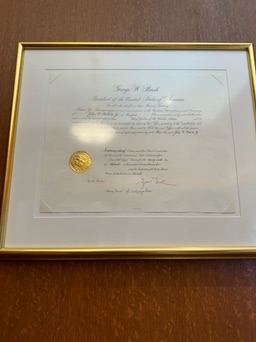
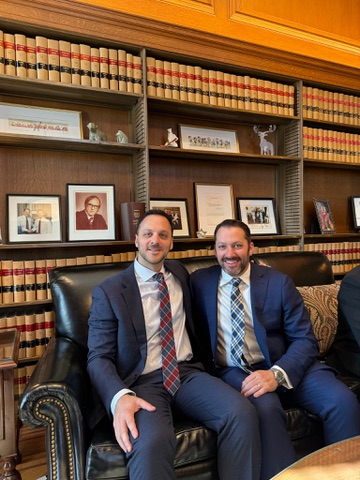
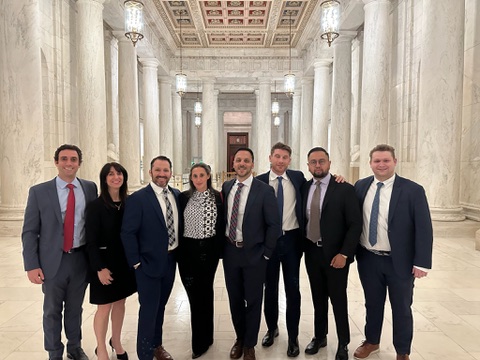
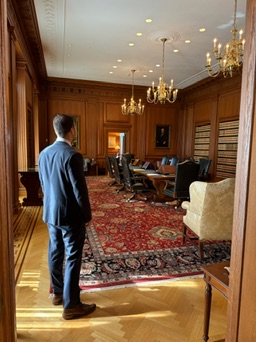
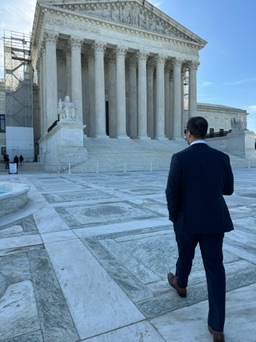
Yesterday, I had the privilege to visit the Supreme Court of The United States as a guest of Chief Justice John Roberts. He’s the 17th Chief Justice of the United States and will likely, and hopefully be, the Chief Justice for the majority of my lifetime.
We had an opportunity to spend time with him in his chambers before and after the oral arguments. The two items on the docket were:
The oral arguments were undoubtedly interesting, dense in legalese and constitutional law, and dramatic in that you are sitting in the highest court in the land listening to arguments that could change history.
But the thing that left the biggest impression on me is this: it was a reminder that most people who serve our country deeply care about their work and their country.
Of course, some of our elected officials are misguided, but that’s what makes America, America. We get to support candidates we like and vote them into office.
America is not perfect. And if you spend any time on social media listening to pro-Hamas crowds screaming “death to America” you’d realize how imperfect we are.
We still have a lot of work to do, but there are indeed still great people trying to do the best they can. And these people put the country first and still fight, day in and day out, for our republic.